DiMaggio’s Streak Might Last Forever
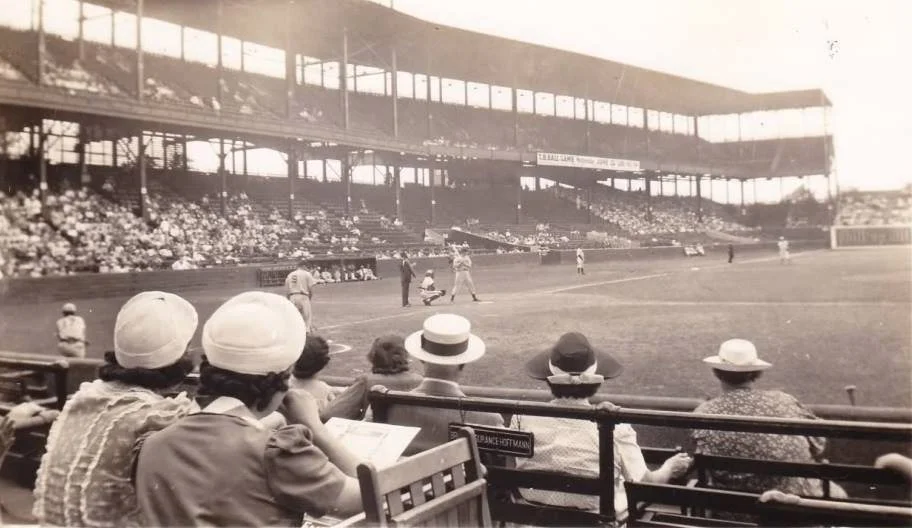
Joe DiMaggio looks to extend his hitting streak to 22 games on June 7, 1941 against the St. Louis Browns.. DiMaggio went 3 for 5 and the Yankees won 11-7 at Sportsman’s Park.
The 1967 movie The Graduate is famous for a number of reasons, not the least of which is the iconic Simon & Garfunkel soundtrack, highlighted by the song Mrs. Robinson. For baseball fans, the easiest Paul Simon lyric to remember from that tune is “Where have you gone Joe DiMaggio? A nation turns its lonely eyes to you.”
The line still holds weight. Perhaps not in the existential anxiety context that fit the Mike Nichols movie 59 years ago, but in a more granular manner.
Baseball, as represented by the likes of Joe DiMaggio, was something entirely different from baseball as we know it today.
The game itself was the attraction - the players, the honest competition, the grandeur, the romance, the virtue. A pencil and a scorecard, a seat in the grandstands, a bit of organ fanfare, a 7th inning stretch … The only fireworks you heard was the sound of kids stomping on popcorn cartons.
Pretty simple stuff it was, in a pretty simple world. The extravaganza now known as “the show,” wasn’t necessary. High-tech stadiums, luxury suites, gourmet menus, fireworks, mascots, bobbleheads, wall to wall media and marketing have changed the landscape. The competition for dollars, attention and entertainment has helped make it so.
What brings DiMaggio and the song lyric to mind is today’s date - July 17. This is the day in 1941 that DiMaggio’s 56 game hitting streak ended. The remarkable run lasted two months that summer, and given the present personality of the game, it might just last forever.
Home run records have long since lost their luster, sullied and distorted by chemical enhancements, Records like those associated with shutouts or complete games are ancient relics, unattainable artifacts from days gone by. DiMaggio’s streak remains as the most relevant and most captivating record on the shelf. But looking through today’s “launch-angle” lens, it’s hard to imagine it ever falling.
It’s been 85 years now, and no one has come close. In 1978, Pete Rose reached safely in 44 consecutive games, a spectacular achievement and still 12 games short. Jimmy Rollins made it to 38 games in 2005-06, but that happened over two seasons. Not the same and not a serious threat.
When DiMaggio went off, the American League hitting streak record was 41 games, set by St. Louis Browns first baseman George Sisler. The overall record was 44 games, reached in 1897 by Baltimore’s “Wee” Willie Keeler.
But the game was quite different in Keeler’s time. A fouled pitch did not count as a strike. A fielding glove looked like a mitten. It’s like comparing Fred Flintstone’s car to a 2015 Ford Escape.
As years go by, DiMaggio’s accomplishment drifts further and further from reality. The lyrics to the hit song Les Brown and his orchestra put to vinyl that summer seem off base:
“He started baseball's famous streak
“That's got us all aglow
“He's just a man and not a freak
Joltin' Joe DiMaggio”
Not a freak? Really?
Consider some of the magic DiMaggio’s 42-ounce bat produced. Apply some modern perspective and see how it distorts.
During the 56 games, DiMaggio batted .408, He had 91 hits overall, 35 for extra bases, including 15 home runs and 55 RBIs. Last year, Cardinals third baseman Nolan Arenado had 95 hits, 31 extra bases, 12 home runs and 52 RBIs in 107 games, or his entire season.
In ’41, DiMaggio was pulling down $37,500. For the 2025 season, Arenado was paid $32 million.
Or how about this: DiMaggio had 193 hits, batted .357 and had a .440 on-base percentage and the hitting streak that season. Again, compensated with $37,500. Jordan Walker just got $1 million for hitting batting practice pitches into the seats at the All-Star Game.
The eyes get more lonely by the day.
One of many stunning aspects of DiMaggio’s Summer of ’41 is the fact he beat out Ted Williams for the Most Valuable Player Award in the American League. Williams led the league in runs (135), home runs (37) and walks (147). He batted .406 - the last to reach .400 - and posted a mind-blowing OBP of .553.
But before words like “highway robbery” or “New York bias” come to mind, DiMaggio’s performance was undeniable in terms of “most valuable.”
When he started his streak on May 15, going 1 for 4 in a demoralizing 13-1 loss to the White Sox, the 14-15 Yankees finished the day in fourth place, 6 ½ games out of first. For his part, DiMaggio was slumping, batting .197 over his last 21 games.
Two months later, 67,458 were in the stands at Cleveland Stadium to see Indians third baseman Ken Keltner make two spectacular plays that denied DiMaggio hits. The record streak ended, but the Yankees still won 4-2, They were 56-27 and their first-place lead improved to seven games.
The next day, DiMaggio went 2 for 4 and started a 16-game hitting streak. That is, he had hits in 72 of 73 games and for the season, reached safely in 124 of the 139 games he played.
In the 223 at-bats of his 56-game streak, DiMaggio never bunted for a hit and struck out five times. The last of those five Ks came in the 24th game on the streak on June 8 - he didn’t whiff again over the final 32 games. In fact, he didn’t strike out again until July 26, or 42 games later. He fanned 13 times all season.
St. Louisans can take pride - I guess? - in knowing our boys did their part. Browns pitchers Bob Harris and Elden Auker gave up more hits to DiMaggio during the streak than any other pitchers. Another interesting sidebar to the streak: DiMaggio had a promotional deal in the works with the Heinz company, which was famous for its “57” sauce. If the streak reached 57, Joe D. was to get $10,000 to endorse the steak sauce. Officially, it stopped at 56, but …
The regular season surge was interrupted by the annual All-Star Game, played on July 8 at Briggs Stadium in Detroit. DiMaggio had a hit in the game for the AL before resuming the regular schedule, So in truth, his streak actually reached 57 games - but the All-Star Game didn’t count.
In the end, the Yankees won 101 games, outdistanced Williams and the Red Sox by 17 and beat the Brooklyn Dodgers in five to win the World Series. Williams had a legitimate MVP gripe when he lost out to DiMaggio in 1947. In ’41, the choice was a no-brainer.
There was a fluidity, a presence about DiMaggio, something Paul Simon tapped into, something that. those of us who did not see him play, or experience the times in which he played, miss. The statistics, dynamic as they are, don’t do DiMaggio justice. It was never just about what he did, it was how he did it.
Don’t take my word for it, take the word of Stan Musial. “The Man” was part of that great triad - Williams, Musial and DiMaggio in the 1940-50s. The Cardinals legend led the NL in hits, doubles, triples and batting average in a single season four times. His career numbers dwarf DiMaggio’s in almost every category.
But, if he was here, Musial would be the first to repeat something he said more than once: “There was never a day when I was as good as Joe DiMaggio at his best,” Musial said. “Joe was the best, the very best I ever saw.”
Where has he gone?